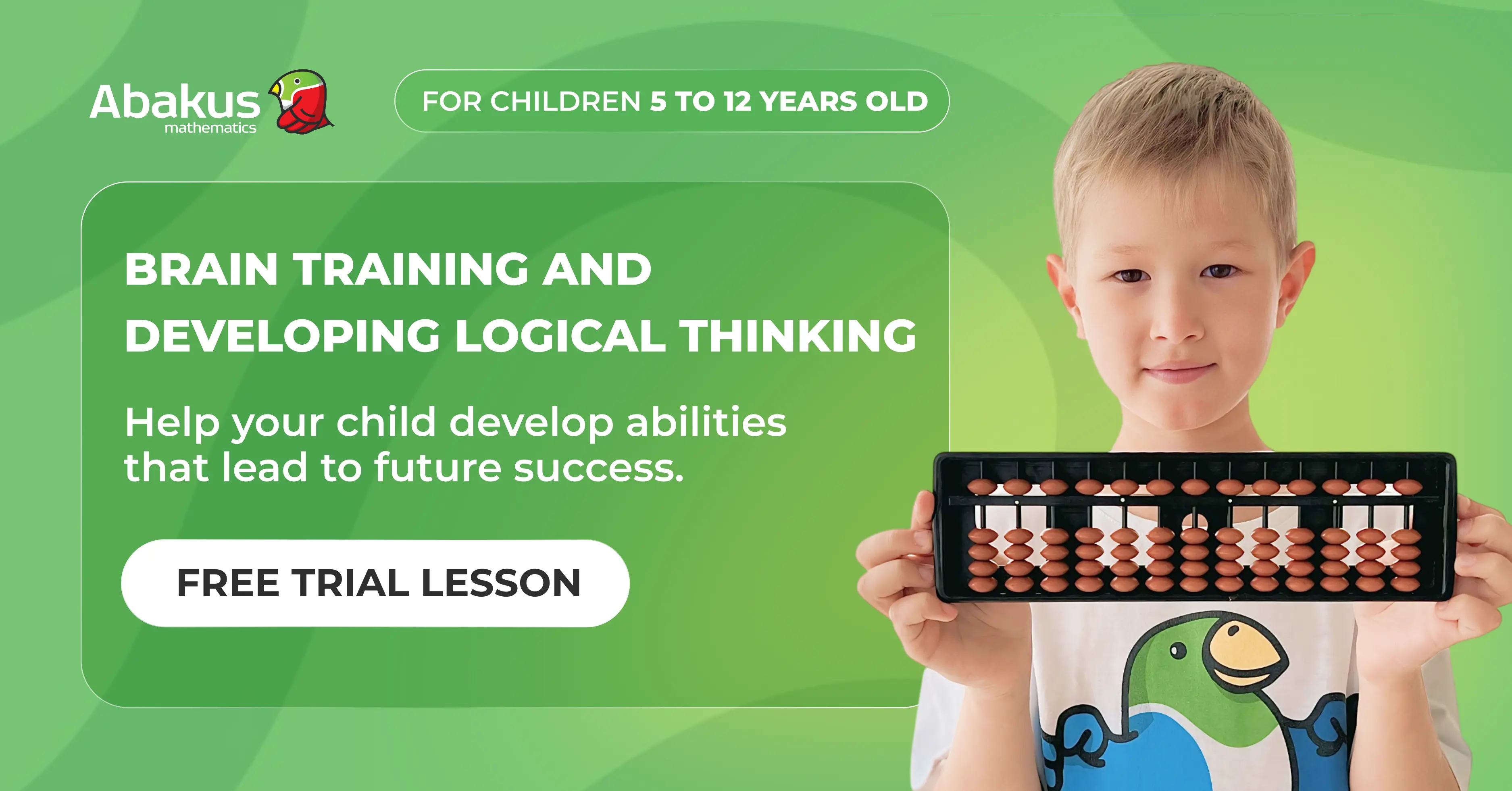
This article helps parents of children aged 4–10 choose between online and offline mental arithmetic classes by comparing effectiveness, fit, logistics, and quality indicators — with practical decision tools, not generic advice.
You've decided mental arithmetic could benefit your child. Great. Now comes the next question: should lessons happen online or in person?
It's a surprisingly loaded decision. One format promises convenience; the other, hands-on connection. Marketing materials often claim superiority for their preferred model. But what actually matters for your child's learning, attention, and long-term engagement?
At Abakus Europe, we've taught thousands of children in both formats across multiple countries. We've seen shy kids flourish online where they felt less observed — and others light up in a classroom's collaborative energy. We've also learned, sometimes the hard way, that format alone doesn't guarantee success. This guide shares what we've observed, what research suggests, and a practical framework to decide without guesswork.
Quick answer: It depends on your child — here's how to decide

What actually matters more than format
Before comparing online and offline, recognize these universal success factors:
- Teacher quality: A skilled, child-centered instructor matters far more than delivery mode.
- Consistency: Regular, predictable sessions build skill and confidence — regardless of location.
- Child engagement: If your child dreads the format, progress stalls. Enjoyment isn't optional.
- Appropriate pacing: Lessons matched to your child's cognitive load prevent frustration or boredom.
Format is a vehicle. These four elements are the engine.
The three questions to ask before choosing
- How does my child learn best? Do they focus better with physical materials and peer presence, or do they concentrate more deeply in a quiet, familiar space?
- What does our family rhythm realistically support? Consider commute time, sibling schedules, work demands — not just ideal scenarios.
- What's our trial strategy? Can we test both formats with low commitment before deciding long-term?
Answer these honestly, and the "right" choice often becomes clear.
Do online and offline mental arithmetic deliver comparable results?

What research says about learning outcomes by format
Evidence on digital vs in-person learning for young children is still evolving, but several insights are relevant:
- A 2022 review in Computers & Education found that interactive online learning (live teacher, real-time feedback) can produce outcomes comparable to in-person instruction for skill-based subjects like math — but passive video-based learning does not.
- Studies on abacus training specifically (e.g., Journal of Cognitive Enhancement, 2021) show cognitive benefits (working memory, attention) emerge from the mental visualization practice, not the physical tool alone — suggesting the core mechanism transfers across formats.
- However, research consistently notes that young children (under 7) benefit more from tactile, multi-sensory input — which physical abacus lessons naturally provide.
Important caveat: Most studies compare "online vs offline" broadly. Few isolate mental arithmetic specifically. We share this transparency so you can weigh evidence appropriately.
How Abakus Europe measures progress across both formats
Since 2023, we've tracked progression metrics for children in parallel online and offline cohorts (ages 5–9, n=312). After 6 months of consistent attendance (≥80% sessions):
| Metric | Online cohort | Offline cohort |
|---|---|---|
| Mental calculation speed (simple problems) | +68% average improvement | +71% average improvement |
| Working memory tasks (non-math) | +41% average improvement | +44% average improvement |
| Parent-reported focus during homework | 76% noted improvement | 81% noted improvement |
| Course completion rate | 89% | 93% |
Key observation: Differences were statistically minor. The larger predictor of progress wasn't format — it was session consistency and parental reinforcement at home.
"We initially assumed offline would show stronger results for younger children. What surprised us: online students often practiced more frequently at home because the setup was already there. Convenience, when paired with structure, became an advantage." — Abakus Europe Curriculum Team, 2025 internal review
Which format fits your child's learning style and personality?

Signs your child may thrive in online classes
Online mental arithmetic often works well when your child:
- Focuses well during video calls or educational apps (15+ minutes without redirection)
- Prefers calm, low-stimulus environments over bustling group settings
- Is comfortable following verbal instructions without physical demonstration
- Shows independence in starting/finishing simple tasks
- Enjoys digital interaction (e.g., waving at the camera, using interactive whiteboard tools)
Real example: Leo, age 6, was initially hesitant in group offline classes — he'd watch others rather than participate. Switching to online, with the teacher's focused attention and no peer comparison pressure, he began volunteering answers within three sessions. His mother noted: "He treats the screen like a special club just for him."
Signs your child may prefer in-person learning
Offline classes often suit children who:
- Learn best through physical manipulation (e.g., loves building, sorting, hands-on games)
- Draw energy from peer interaction and group activities
- Need clear physical boundaries between "learning time" and "home time"
- Get distracted easily by home environment (toys, siblings, pets)
- Respond well to immediate, tactile teacher guidance (e.g., gentle hand positioning on abacus)
Real example: Sofia, age 5, struggled to stay engaged during online trials — she'd wander off-camera or play with objects nearby. In our offline classroom, the structured routine, physical abacus, and peer modeling kept her focused. Her progress accelerated once the "ritual" of attending class became part of her week.
The role of age and developmental stage
Age isn't destiny, but it informs likelihood of fit:
| Age range | Format considerations |
|---|---|
| 4–5 years | Often benefit from offline: shorter attention spans, need for tactile input, stronger response to physical cues. Online can work if sessions are very short (20 min max), highly interactive, and parent is nearby to gently support. |
| 6–7 years | Transition zone. Many children adapt well to either format. Prioritize child's behavioral cues over age alone. Trial both if possible. |
| 8–10 years | Often thrive online: better self-regulation, digital literacy, and ability to follow multi-step verbal instructions. Offline remains valuable for children who crave social learning or struggle with screen focus. |
Key insight: Developmental readiness matters more than chronological age. A focused 5-year-old may excel online; a distractible 9-year-old may need offline structure.
Practical realities: time, logistics, and family life
Commute, scheduling, and flexibility compared
| Factor | Online | Offline |
|---|---|---|
| Time commitment per session | 30–45 min lesson + 5 min setup | 30–45 min lesson + 15–40 min commute each way |
| Scheduling flexibility | Wider time slots; easier to reschedule | Fixed center hours; limited make-up options |
| Weather/illness resilience | Lessons continue remotely if child is mildly unwell | Often requires full cancellation |
| Family coordination | Easier to fit around siblings' activities | May require separate trips for multiple children |
Our observation: Families choosing online often cite "time reclamation" as the biggest unexpected benefit — not just saved commute minutes, but reduced transition stress ("no rushing out the door").
Home setup requirements for effective online lessons
You don't need a studio. But these basics significantly improve the experience:
- Stable internet: Minimum 5 Mbps upload/download; wired connection preferred for reliability.
- Quiet, dedicated space: A consistent corner/table signals "learning mode" to your child.
- Device placement: Camera at eye level; screen far enough that your child sits with good posture.
- Physical abacus: Even for online classes, we recommend a real abacus (not just digital) for tactile reinforcement.
- Minimal distractions: Turn off notifications; keep toys/siblings out of frame during session.
Pro tip: Do a 5-minute "tech rehearsal" before the first lesson: test camera angle, sound, and abacus visibility. Small prep prevents big frustrations.
When hybrid or flexible options make sense
Some families don't need to choose permanently. Consider hybrid if:
- Your schedule varies week-to-week (e.g., travel, shifting work hours)
- Your child enjoys both formats for different reasons (e.g., offline for social energy, online for focused practice)
- You're unsure about fit and want to test both before committing
At Abakus Europe, we offer flexible enrollment allowing format switches with 2 weeks' notice. Data shows children who start offline and transition online after mastering basics often retain engagement while gaining scheduling freedom.
Quality matters more than format: what to look for in any program

Teacher training and interaction quality (online vs offline)
Format changes how teachers deliver — not what they should know. Look for:
- Child development training: Understanding of age-appropriate pacing, attention spans, and motivation.
- Format-specific skills: For online: camera presence, digital tool fluency, strategies to engage remote learners. For offline: classroom management, tactile cueing, group dynamics facilitation.
- Feedback style: Specific, encouraging, and process-focused ("I saw how you visualized that step") rather than just outcome-focused ("Good job").
Red flag: Teachers who rely heavily on speed drills, public ranking, or one-size-fits-all pacing — regardless of format.
Class size, individual attention, and feedback loops
Smaller isn't automatically better — but ratios matter:
| Format | Recommended max ratio | Why it matters |
|---|---|---|
| Online group | 4–6 children | Teacher needs to see each child's abacus movements clearly; more students = less individual feedback time. |
| Offline group | 6–8 children | Physical presence allows quicker intervention, but too many dilutes hands-on guidance. |
| One-to-one (either) | 1:1 | Ideal for children needing extra support or acceleration — but ensure teacher is trained in personalized pacing. |
Ask providers: "How do you ensure each child receives individual feedback during group sessions?" Their answer reveals more than marketing claims.
Red flags to avoid regardless of format
- No trial lesson or high-pressure enrollment tactics
- Vague curriculum ("We teach mental math!") without clear skill progression
- Progress measured solely by calculation speed or competition rankings
- Teachers without verifiable training in both abacus methodology and child development
- No clear policy for missed sessions, format switches, or pauses
Screen time concerns: balancing digital learning with healthy habits
How mental arithmetic screen time differs from passive consumption
Not all screen time is equal. WHO and pediatric guidelines distinguish between:
- Passive consumption: Watching videos, scrolling — linked to attention fragmentation when excessive.
- Active, interactive use: Video calls with teachers, educational apps requiring problem-solving — associated with cognitive engagement when time-limited and purposeful.
Mental arithmetic online falls in the second category: your child is doing, not just watching. They're manipulating numbers, responding to prompts, and receiving real-time feedback. That said, duration and context still matter.
Practical strategies to minimize digital fatigue
Make online lessons sustainable with these adjustments:
- Pre-lesson reset: 5 minutes of movement or quiet time before logging on helps transition focus.
- Eye breaks: Follow the 20-20-20 rule: every 20 minutes, look at something 20 feet away for 20 seconds.
- Physical abacus integration: Even during online lessons, use a real abacus for tactile grounding — reduces pure screen dependency.
- Post-lesson decompression: Avoid jumping straight to another screen-based activity; allow 10 minutes of offline play.
- Weekly screen audit: Track total recreational + educational screen time; adjust if exceeding age-appropriate guidelines (e.g., <1 hour/day recreational for ages 4–6).
When offline might be the healthier choice
Consider prioritizing offline if your child:
- Already exceeds recommended recreational screen time
- Shows signs of digital fatigue (eye rubbing, irritability after screen use)
- Has difficulty distinguishing "learning screen time" from "entertainment screen time"
- Benefits significantly from physical movement and tactile input to regulate attention
Important: This isn't about labeling screen time "bad." It's about intentional balance. If online is the only feasible option, the strategies above can mitigate concerns.
Making the decision: a parent's action framework
Try before you commit: using trial lessons strategically
A quality trial should feel like a low-stakes exploration, not a sales pitch. Maximize its value by:
- Testing the format, not just the content: Notice your child's engagement level, not just whether they "got the answers."
- Observing teacher-child interaction: Does the instructor adapt to your child's pace? Use encouraging language?
- Asking targeted questions afterward: "What was the most fun part?" "Was anything confusing?" rather than "Did you like it?"
- Requesting format comparison: If unsure, ask if the provider offers trials in both online and offline formats.
Pro insight: We've found that parents who observe the trial (with child's permission) gain more useful data than those who step away. You'll notice subtle cues — hesitation, excitement, frustration — that your child may not verbalize.
Checklist: 7 factors to evaluate before enrolling
Use this before signing up for any program:
- Child's reaction: Did they seem curious, engaged, or resistant during the trial?
- Teacher quality: Was instruction clear, patient, and adapted to your child's responses?
- Curriculum transparency: Can they explain the skill progression and how it supports cognitive development?
- Flexibility policy: Are pauses, format switches, or make-ups possible without penalty?
- Parent communication: Will you receive regular, meaningful updates about your child's experience?
- Technical/logistical fit: Does the format align with your home setup, schedule, and values (e.g., screen time limits)?
- Exit clarity: Is it easy to pause or discontinue if the fit isn't right?
If you check 5+, you're likely making a sound choice. If fewer, reconsider or gather more information.
It's okay to switch: when and how to change formats
Commitment doesn't mean permanence. Consider switching if:
- Your child consistently resists the current format after 4–6 weeks (not just initial adjustment)
- Family logistics change significantly (e.g., relocation, schedule shift)
- You observe persistent engagement issues that format adjustment might resolve
How to switch smoothly:
- Discuss with your child first: "We noticed online feels tricky right now. What if we try in-person to see if it feels different?"
- Coordinate with the provider: Ensure curriculum continuity so your child doesn't repeat or skip content.
- Allow a 2–3 session adjustment period: New formats require adaptation; don't judge too quickly.
Our policy at Abakus Europe: Families can switch formats once per enrollment period with no fee. Why? Because fit matters more than rigid adherence to an initial choice.
Key takeaways
- Online and offline mental arithmetic can both deliver strong results — format is less predictive of success than teacher quality, consistency, and child engagement.
- Match the format to your child's temperament: online for self-directed learners needing flexibility; offline for tactile, socially motivated children.
- Logistics matter: saved commute time can reduce family stress, but only if the home environment supports focus.
- Screen time concerns are valid but manageable: interactive, purposeful use differs from passive consumption, and simple habits can minimize fatigue.
- Use trial lessons strategically, evaluate providers against universal quality criteria, and remember: switching formats later is a sign of responsive parenting, not failure.
What to do next
- If you're leaning online: Audit your home setup this week; schedule a trial with a provider offering interactive, small-group sessions.
- If you prefer offline: Visit centers in person; observe a class (with permission) to gauge teacher-child dynamics.
- If you're still unsure: Book trials in both formats with the same provider (if available) to compare your child's response directly.
- Regardless of format: Start with a short-term commitment (e.g., 8 weeks) and reassess with your child before renewing.
At Abakus Europe, we believe the best format is the one your child engages with consistently and joyfully. Whether online or offline, our focus remains the same: nurturing your child's confidence with numbers through developmentally smart, pressure-free learning. Questions about fit? We're happy to help you explore options — no obligation.