Math has been associated with very different emotions for years. For some, it is a logical puzzle. For others, it is a subject that causes stress at the very thought of it. “I’m just not a numbers person.” “Math was never my strong suit.” These beliefs often appear in childhood and can stay with us for years.
But math doesn’t bite.
It is worth looking at mathematics from a broader perspective – not simply as a collection of formulas, calculations and rules, but as a way of developing how we think.
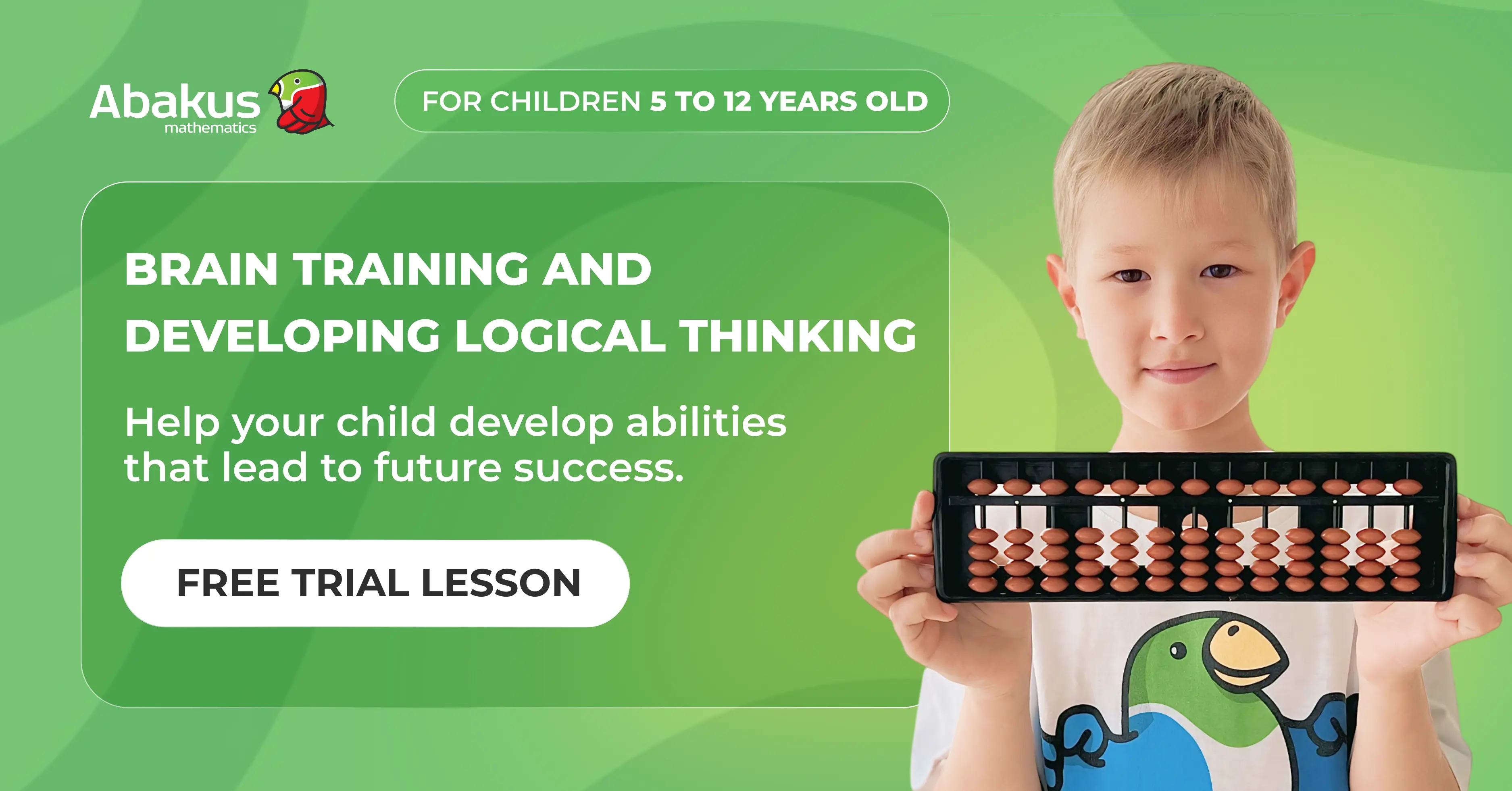
Mental Arithmetic Is About More Than Calculation
In a world where a calculator is always within reach and technology can perform even complex calculations in seconds, being able to calculate quickly in your head may seem like a skill from another era.
Yet mental arithmetic is not about competing with a calculator.
Its real value lies in training cognitive skills: concentration, memory, logical thinking, mental flexibility and the ability to process information quickly.
When a calculation has to be performed without writing down every step, the mind must simultaneously retain information, process it and find the most effective path to the solution.
That kind of training goes far beyond mathematics.
Numbers Teach Us How to Approach Problems

Every mathematical task is, in a sense, a problem that needs to be solved.
Sometimes the solution is obvious. Sometimes a different approach is needed. And sometimes the first attempt turns out to be wrong, requiring a fresh start.
This is where one of the greatest values of mental arithmetic lies.
Children learn that difficulty does not mean a problem cannot be solved. It means that the right strategy still needs to be found.
Over time, “I can’t do it” can become “I’ll try a different way.”
That is an important shift – not only when learning mathematics.
From a School Exercise to a Future Skill
The ability to think logically, analyse information, stay focused and make decisions matters in almost every area of life.
In business, decisions rarely arrive as simple problems with one correct answer. More often, they require analysing multiple pieces of information, identifying relationships, filtering out what is irrelevant and choosing the best possible solution.
That is why developing the way we think can be just as important as acquiring specific knowledge.
Mental arithmetic can be one of the tools used to develop this kind of thinking.
The Most Important Result Isn’t Always a Number
Paradoxically, the most important outcome of learning mental arithmetic does not have to be how quickly someone can calculate 47 × 26.
What matters far more is what happens afterwards.
Greater concentration. Stronger working memory. More confidence when working with information. A greater willingness to take on challenges.
And, above all, greater confidence in one’s own abilities.
When a difficult task stops being a reason to give up and becomes a challenge that can be broken down and solved step by step, the way we look at more than just mathematics begins to change.
The way we look at problems changes.
Math Doesn’t Bite
There is no need to be afraid of mathematics. Nor does someone have to be a naturally gifted “math person” to benefit from working with numbers.
It is enough to stop treating mathematics as a test of who is talented and who is not, and instead see it as an opportunity to train the mind.
Because ultimately, it is not simply about calculating faster.
It is about thinking more effectively, approaching challenges with greater confidence, and not giving up simply because a problem seems difficult at first glance.
Math really doesn’t bite.
It simply teaches us how to think.